'Toxic' Review, Yash Commands Style And Grandeur, But Synthetic VFX And Messy Screenplay Hurt
Yash has returned to the theatres after a long gap of four years with 'Toxic.' The movie is directed by Geetu Mohandas, known for her work in 'Moothon' and 'Liar's Dice.'

See more of our coverage in your search results.
Add BollywoodShaadis on GoogleAfter KGF, expectations from Yash are sky-high, and Toxic: A Fairy Tale for Grown-Ups arrives as a full-blown event film. Directed by Geetu Mohandas, the 3-hour-15-minute gangster epic mounts a lavish, violent world set between 1947 and 1967.
It banks heavily on Yash's swagger, slow-motion mass moments, and gritty style, but stumbles with an overstretched screenplay, synthetic VFX, and underwritten female characters. It is ambitious, loud, indulgent, and strictly for fans seeking macho spectacle over substance every time.
Swagger takes centre stage; the story loses its way

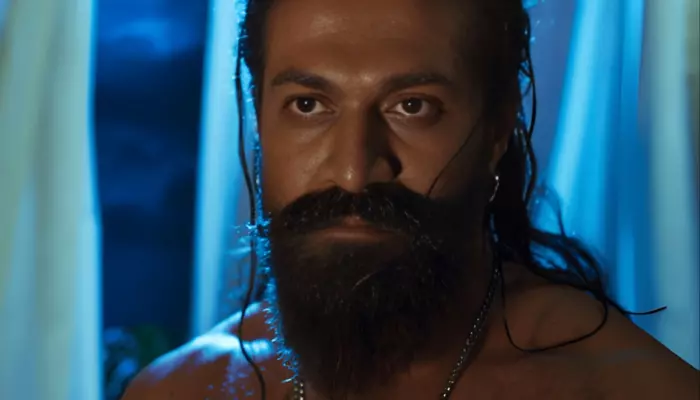
The aura around Yash is undeniable from the first frame, and Toxic leans heavily on that magnetic presence. The film opens with a familiar template, with colour grading, slow-motion swagger and editorial rhythm echoing the world of KGF, an association strengthened by editor Ujwal Kulkarni.
The protagonist 'Raya' is introduced as a man who worships violence, lights cigarettes with theatrical flair and treats mortality as a performance. The star carries the role with effortless style, moving between menacing dominance and a quieter, almost Macbeth-like guilt about the bloodshed he creates. The duality gives the character some dimension beyond the alpha-male archetype that has become saturated.
The setting is ambitious, placing the narrative in Goa in 1947 and later 1967, with detours to Macau and snow-clad mountains that confuse the geography more than enrich it. The period design is lavish, filled with fedoras, slick suits and speakeasy-like dens that resemble 1920s Chicago transposed onto an Indian underworld.
Mounted on a grand scale, the visuals are polished but often feel synthetic, with CGI-heavy action and gore that appears artificial rather than visceral. Beheaded bodies, severed hands offered as handshakes, and prolonged bloodletting are staged for shock but lack impact. From the narrative point of view, the film spreads itself thin.
'Raya' rises from being a gangster to a powerful don, and his bond with his elder sister 'Ganga' is shown as his emotional anchor. Childhood portions detailing her sacrifices feel borrowed from countless gangster sagas. His romantic entanglements form a cluttered subplot where he is in a relationship with 'Rebecca,' the daughter of his associate 'Salvadore,' followed by an intense affair with circus acrobat 'Nadia', mother of his child 'Rumi.'
The love story with 'Nadia' is given emotional weight through the track Tabahi, and remains one of the more convincing threads. Yet most relationships feel underwritten, existing to orbit the male lead. The pacing before the interval is indulgent, with dialogues deliberately slowed for applause and scenes stretched beyond a certain point.
Crowded female ensemble and an overstretched ambition

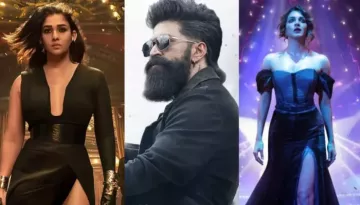
On paper, the casting of the leading women promises a lot, with Nayanthara, Kiara Advani, Huma Qureshi, Tara Sutaria and Rukmini Vasanth sharing space. In execution, the promise dissolves.
'Ganga' begins as a steely, intriguing figure, compelling in her action avatar, but is soon reduced to a decorative presence. 'Nadia' is sketched as a grief-stricken woman with a troubled past, and Kiara Advani brings restraint and nuance to a role that demands emotional tightrope-walking. However, her arc too remains incomplete.
Huma Qureshi as 'Salvadore's' mistress and Akshay Oberoi as her brother, along with the character 'Rebecca,' also leave an impression with their screen presence. But they get limited screen time as their arcs end abruptly after the first half. Rukmini Vasanth enters with grandeur post-interval but fades within a few scenes.
The female gaze expected from director Geetu Mohandas is largely absent in the visual language. Women are frequently presented as eye candy or objects of desire, their agency tied solely to 'Raya.' This contradiction between an attempt at bold, experimental presentation and persistent male-gaze tropes makes the film feel more like Yash's vehicle than Mohandas's distinct voice, a surprising departure from her work in Moothon.
The second half attempts course correction with more drama and a late twist involving 'Ticket,' the abandoned son returning to settle scores. The idea has shock value but arrives after nearly three hours of chaotic narration that shifts from gangster drama to brother-sister sentiment to father-son conflict.
Ravi Basrur's loud background score injects energy where the screenplay sags, though barring Tabahi, songs sound synthetic and forgettable. At 3 hours and 15 minutes, the runtime tests patience. Action set pieces are plentiful and stylish but repetitive, justifying machismo without subversion. Emotional balance is missing, making the spectacle noisy and overbearing.
For admirers of hyper-masculine, massy cinema with whistle-worthy moments, Toxic delivers star power and scale. As a cohesive drama, it remains a messy, exhausting experience that mistakes excess for awe, surviving more on charisma than on clarity.
Have you watched Toxic in theatres? Let us know.
PC: IMDb, KVN PRODUCTIONS/YouTube
Also Read: Dolly Parton Revealed Why She Didn't Have Kids With Carl Dean Despite Being Married For 60 Years