- Home
- / Television
- / OTT
'One Hundred Years Of Solitude' Part 2 Review, Rich Themes And Cast, But Uneven Execution
'One Hundred Years of Solitude' Part 2 has arrived on Netflix more than a year after Part 1. Seven episodes have arrived, and the finale is scheduled to air on August 26, 2026.

See more of our coverage in your search results.
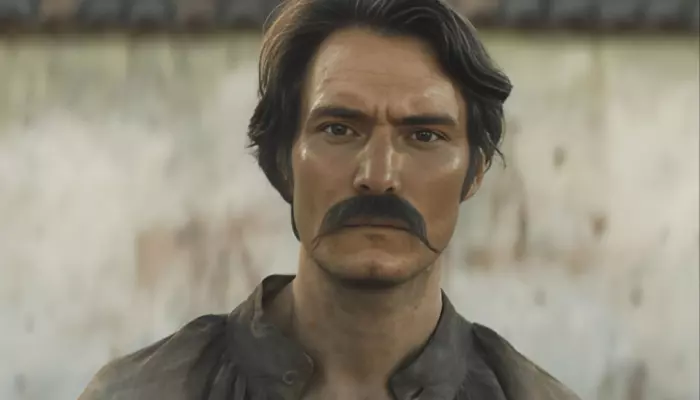
Add BollywoodShaadis on GoogleOne Hundred Years of Solitude has returned with its second part on Netflix on August 5, 2026. This time, the fairytale of Macondo gives way to something darker. Directed by Laura Mora and Carlos Moreno, the new episodes track the town’s opening to the outside world through trains, trade, the banana company, and the ‘Buendía’ family’s unraveling alongside it.
With war, politics, and magic woven together, One Hundred Years of Solitude Part 2 trades the wonder of the beginning for decline. It’s ambitious, uneven, and at times devastating, but it makes García Márquez’s epic feel urgent again.
From building hope to slow decay
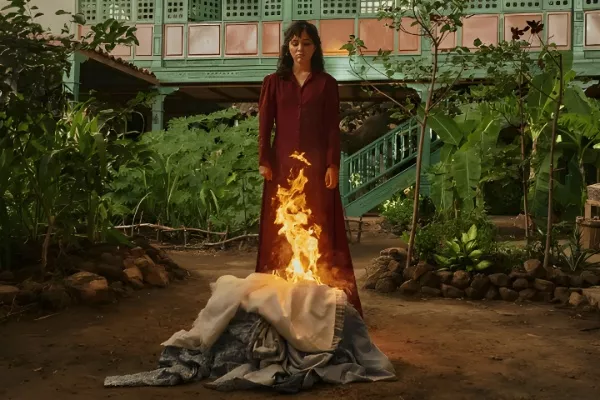
Part 1 of One Hundred Years of Solitude was about building Macondo. Part 2 shows what happens when that isolated town starts to open up. The train arrives, followed by the foreigners. Then comes the banana company. What once felt like progress quickly turns into something that breaks the town apart.
The series keeps the visual scale from the first eight episodes. Directors Laura Mora and Carlos Moreno, with cinematographers James Brown and Camilo Monsalve, make Macondo feel both grand and intimate.
Where the beginning was full of bright color and invention, this half is defined by slow decline. Costume designer Catherine Rodríguez shows this through clothing, where outside cultures clash with local styles, and as the town deteriorates, the ‘Buendías’ cling to older fabrics and silhouettes. Camilo Sanabria’s score adds to that feeling, stretching out during quiet moments and making the big ones hit harder.
The story ties Macondo’s fate directly to the ‘Buendía’ family curse. ‘Colonel Aureliano Buendía,’ once a soft-spoken artist, is now a hardened revolutionary fighting the Conservative Party. Even after the war should have ended, he keeps going. He fathers 17 sons with 17 women, and they all come to ‘Úrsula’s’ door in Macondo asking to be recognized. None can be made official heirs, but their arrival adds more pressure to a family already breaking from within.
‘Úrsula,’ played by Marleyda Soto, anchors these episodes. She’s older and physically worn, but her resolve never breaks. She’s trying to hold peace together while her son pushes for war. At the same time, Macondo itself changes. Invention and industry bring money, but they also bring outsiders who see the town as something to use.
The show makes it clear: once Macondo connects to the world, its solitude is gone, and with it, the town’s protection. The magical moments remain: a man floats into the sky, another is followed by yellow butterflies, and a rain lasts for four years, eleven months, and two days. But they now sit next to very real political violence. That mix is what gives the season its weight.
Family, politics, and the cost of progress
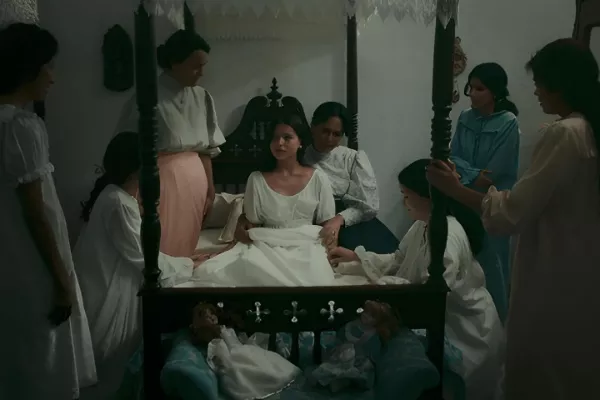
This second half focuses on three figures: the twins ‘Aureliano Segundo’ and ‘José Arcadio Segundo,’ alongside ‘Fernanda del Carpio.’ The twins, played as youths by Jorge Quintero and as adults by Julián Román, are hard to tell apart at first, but their paths split Macondo in two.
‘José Arcadio Segundo’ becomes the inventor whose work brings the outside world in. That connection leads to the banana company and to brief prosperity, but also to exploitation and devastation. ‘Aureliano Segundo’ is the opposite: impulsive, drawn to parties and to his long affair with ‘Petra Cotes.’ His sudden marriage to ‘Fernanda’ while staying with ‘Petra’ creates instability that runs through their children.
‘Fernanda,’ played by Laura Taylor and Carla Baratta, brings religion and strict rules into the house. Her cold relationship with ‘Remedios’ and her distance from her own children widen the family rift. Baratta plays her with both outer harshness and inner pain, rooted in how the ‘Buendías’ treat her. Juanita Molina as ‘Meme’ adds another layer, showing teenage rebellion and a tragic forbidden love. The women, including ‘Úrsula,’ ‘Fernanda,’ ‘Remedios,’ and ‘Meme,’ end up carrying much of the emotional weight while the men drive the conflict.
Politically, the season gets sharper. The arrival of the train and the banana company turns Macondo into a version of unrestrained capitalism. The promise of development brings jobs and modern life, but also leads to protest, repression, and a massacre that leaves only one survivor to remember it. García Márquez’s critique feels current because the same patterns still show up today.
The adaptation isn’t perfect. It repeats itself, simplifies some threads, and stretches others. A few characters drift into familiar territory. But under Mora’s direction, the series still manages to untangle the novel’s complex timeline and make it watchable.
It’s less convoluted than Part 1 and more direct. It doesn’t replace the book, but it works as a respectful, large-scale translation ambitious, uneven at times, and ultimately successful at showing how a family, a town, and a country can be shaped and destroyed by the same forces.
BollywoodShaadis Rating: 3/5
Have you watched One Hundred Years of Solitude Part 2 on Netflix yet? Let us know.
PC: IMDb
Also Read: Akanksha Chamola Finally Opens Up On Divorce From Gaurav Khanna, 'We Just Have To Sign The Papers'