- Home
- / Television
- / OTT
'My Brilliant Career' Review, Strong Performances Lift This Netflix Series Despite Rushed Subplots
'My Brilliant Career' is a new show on Netflix, adapted from a novel by Miles Franklin, which was published back in 1901.

See more of our coverage in your search results.
Add BollywoodShaadis on GoogleNetflix's adaptation of Miles Franklin’s My Brilliant Career with a modern take has finally arrived on August 13, 2026. Set in 1890s Australia, it follows ‘Sybylla Melvyn,’ a defiant young writer refusing marriage and convention to chase independence. Led by a luminous Philippa Northeast, the six-part series blends period detail with a contemporary soundtrack and inclusive storytelling.
Witty, warm, and timely, it keeps the novel’s rebellious spirit while feeling fresh for 2026, proving this classic still has plenty to say about freedom, ambition, and being a woman on her own terms.
My Brilliant Career reinvents a classic for 2026
The challenge with any remake is proving it needs to exist at all. Almost 50 years after the Oscar-nominated 1979 film, Netflix returns to Miles Franklin’s 1901 novel My Brilliant Career with a six-episode series that is faithful to the source material and provides something new at the same time.
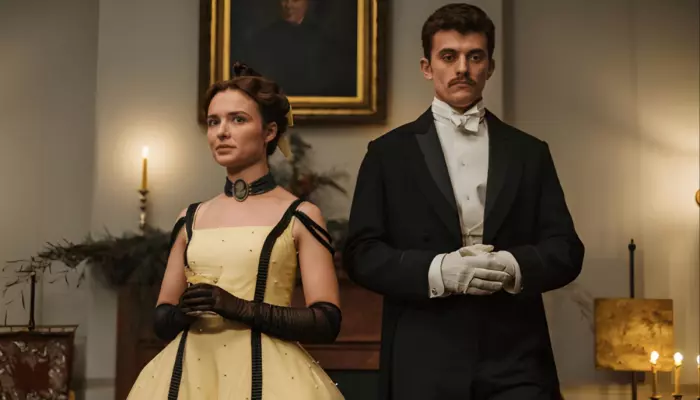
Set in 1890s Australia, the story follows ‘Sybylla Melvyn,’ played by Philippa Northeast. She comes from a poor farming family in Possum Gully and is sent to live with her wealthy, widowed grandmother, ‘Mrs. Bossier,’ at the grand estate Caddagat. The plan is simple: shape ‘Sybylla’ into a proper young lady and marry her off to solve the family’s debts. ‘Sybylla’ has other plans. She wants to write, to be independent, and to live on her own terms.
From the first frame, the series announces its tone. A modern soundtrack featuring Australian artists, bold episode titles, and a heroine who dances at formal parties and recites sensual poetry in front of suitors set it apart from traditional period drama. The show borrows energy from recent hits with lively scores and outspoken women, but it carves its own space by staying rooted in Franklin’s defiant spirit.
Northeast carries the series. She plays ‘Sybylla’ with vim, vigour and joy, capturing both the humor and the hurt of a young woman fighting against dress codes, manners, and a society that wants her tamed. ‘Sybylla’ is hot-headed and direct, running wild in uncomfortable shoes while trying to protect a creative soul that bruises easily. The performance makes every rebellion feel earned, not performative, and anchors the story as ‘Sybylla’ moves between ecstasy and melancholy.
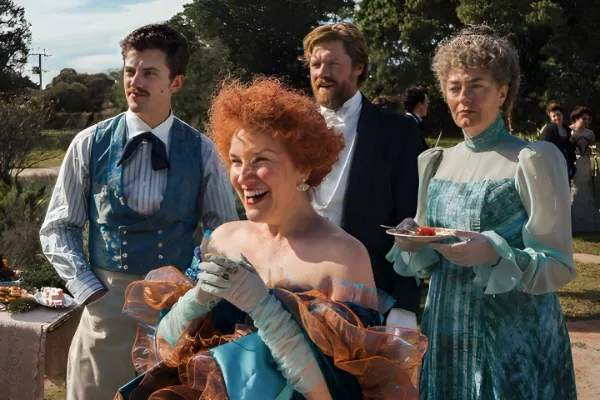
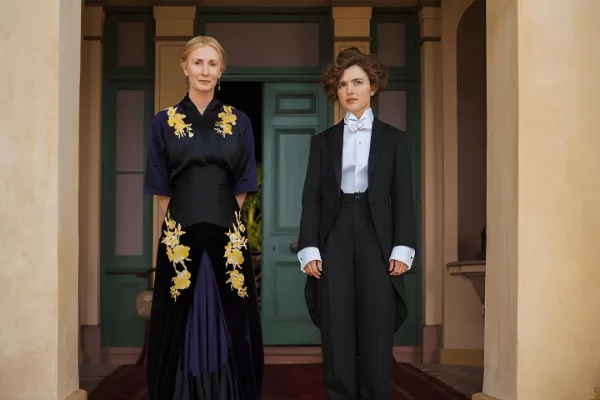
The world around her is just as alive. Anna Chancellor brings layered authority and hidden warmth to ‘Mrs. Bossier.’ Genevieve O’Reilly plays ‘Aunt Helen’ with quiet strength, a woman who has run a household for years only to be passed over for inheritance. Kate Mulvany steals scenes as the glamorously eccentric neighbor ‘Augusta,’ who encourages ‘Sybylla’ to publish and pushes against the limits of her own bohemianism.
The love story unfolds slowly and never takes over. Jake Dunn is ‘Frank Hawden,’ the English foreman with a convivial start and growing vulnerability. Christopher Chung is ‘Harry Beecham,’ ‘Augusta’s’ nephew, whose own freedom is restricted by class and expectation. The triangle develops through overheard words and small moments of connection, not grand gestures.
A period drama that looks forward
What makes this adaptation stand out are the thoughtful updates woven into the original text. Inclusive casting is not window dressing. Sherry-Lee Watson plays ‘Nell,’ a talented First Nations horse trainer who dreams of becoming foreman at Caddagat despite barriers of race and gender. Her sister ‘Betty,’ played by Miah Madden, navigates a secret relationship that shows the force of colonial power. ‘Harry’s’ Chinese heritage also creates friction with high society, no matter his wealth.
These storylines are given room to breathe. The show highlights joy and triumph alongside setbacks. It also addresses sexism head-on, from the expectation that women must marry for security to the way women’s work is made invisible. A subplot about a male homosexual relationship adds further weight, showing the fear of a time that could not accept it.
The series keeps the novel’s defiance but adds a touch more optimism. It respects the source while refusing to take itself too seriously. Production design is playful. Dialogue is witty and intelligent. The pacing across six episodes is tight, never overstaying its welcome.
The result is a show that feels timeless and modern at once. ‘Sybylla’s’ fight against a patriarchal system built for her to fail resonates in 2026. Her desire to write, to speak truth, and to choose independence over a safe marriage is what makes the character endure.
For viewers who usually avoid corsets and drawing rooms, this is an easy entry point. It has the lightness of touch and sharpness of writing that makes bingeing feel effortless, but it never becomes superficial. Every character has purpose, and the ensemble supports Northeast without ever dimming her light.
By the end, the story leaves a simple impression: independence is worth the cost. My Brilliant Career takes a classic about a young woman who wanted more and proves that the story still has plenty to say. It is clever, glorious to watch, and a rare period piece that manages to feel both authentic and fresh.
Have you watched My Brilliant Career on Netflix? Let us know.
PC: IMDb
Also Read: BLACKPINK Lisa Sparks Dating Buzz With Thailand's Blue Pongtiwat Amid Split; Here's All About Him