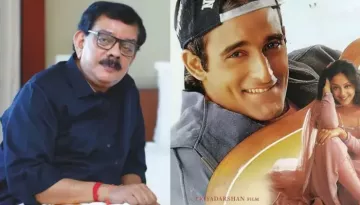
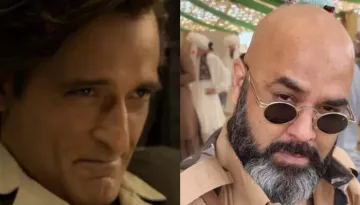
'Mahakali', Why Akshaye Khanna Agreed To Play 'Shukracharya'? The Chilling Lore Of The 'Asura Guru'
Akshaye Khanna has been hogging the limelight for his appearance in 'Shukracharya'. However, it has left fans wondering why the choosy actor said yes to the role.

See more of our coverage in your search results.
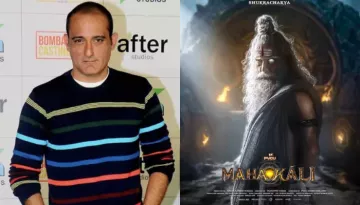
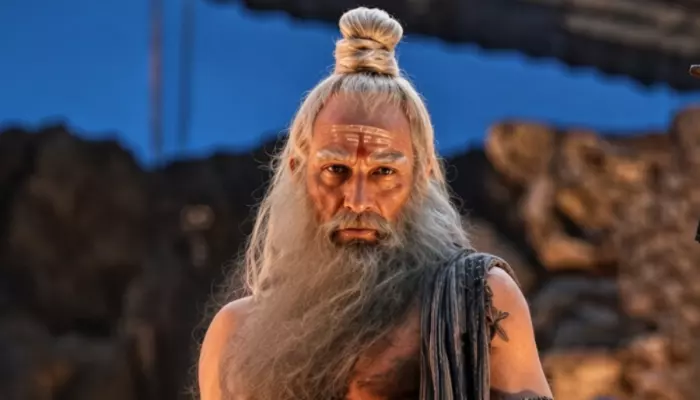
Add BollywoodShaadis on GoogleAkshaye Khanna is all set to make his Telugu debut with Mahakali. The first teaser for the film has been released, and it was enough to hook fans. Especially with Akshaye playing the role of a mythological anti-hero and Asura guru 'Shukracharya'. Amid the buzz, fans have grown curious about what led Akshaye to choose the role and the tale behind the Asura guru.
Why did Akshaye Khanna agree to play 'Shukracharya'?
Akshaye Khanna looks unrecognisable as the Asura guru 'Shukracharya', who is at odds with the protagonist, essayed by Bhoomi Shetty. While the teaser has created immense buzz, it has also left fans wondering what led him to accept the role. For the unversed, it was previously reported that Akshaye exited Drishyam 3, allegedly due to disagreements over his remuneration and look in the film.
He reportedly demanded Rs. 21 crore following the twin successes of Dhurandhar and Chhaava. However, the makers could not match his offer. A source in a conversation with Mid-Day reflected on why Akshaye agreed to the role and revealed that the actor was intrigued by the Asura guru. The source added:
"In Hindu mythology, he was the revered teacher of the Asuras and advised them in their battles against the gods. His primary role was to revive the dead demons, while Maa Kali's role was to destroy the demon army. That put them on opposite sides of the conflict. Shukracharya is considered a knowledgeable sage rather than inherently evil. He is a misunderstood character in Indian scriptures, and Akshaye loved that complexity."
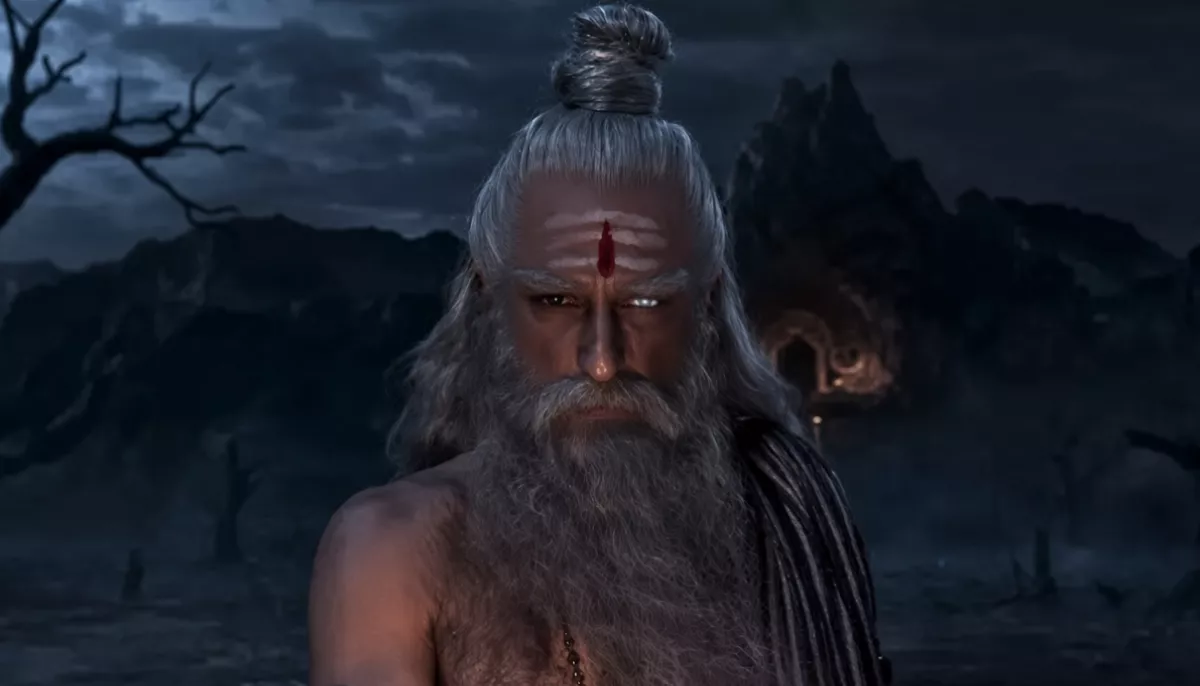
The legendary lore behind Shukracharya
The teaser suggests that Shukracharya was not just a figure preparing for a war between good and evil, but someone who questioned the very definition of it. He questioned why Devas got the nectar while Asuras were thrown into hell despite having put in equal effort. Shukracharya challenged the fairness of the cosmic order, asking what was "righteous" and what was "unrighteous," giving his conflict a far more complicated edge.
Long before the West had the Avengers, Harry Potter, and Jedi, Indian epics had sages, divine weapons, supernatural powers, rival cosmic factions, curses, boons, forbidden knowledge, and characters whose morality was anything but simple. But where does the story even begin? Well, while it's hard to estimate the beginning of it all, our story begins with Shukracharya, a brilliant student, a formidable teacher and an equally brilliant competitor.
Shukracharya was born to sage Bhrigu and Kavya. However, before he became the Asura guru, he was known as Ushna. He studied at Angiras Rishi's ashram alongside Brihaspati, Angiras's son. Ushna was brilliant, but he felt that Brihaspati was heavily favoured because he was the teacher's son or what we today call "nepotism". Nonetheless, what started as the frustration of a gifted student soon turned into something far bigger.
Ushna had no interest in being just another Vedic scholar, so he expanded his knowledge to include strategy, debate, politics, and the complex science of human behaviour at Gautama Rishi's ashram. Skilled, capable and already a wounded lion, Ushna's angst was further fuelled when the Devas appointed Brihaspati as their guru instead of Ushna. To him, it was confirmation that merit alone could not overcome lineage and acceptance. His competitor was the son of a guru, while his own mother had an Asura connection.
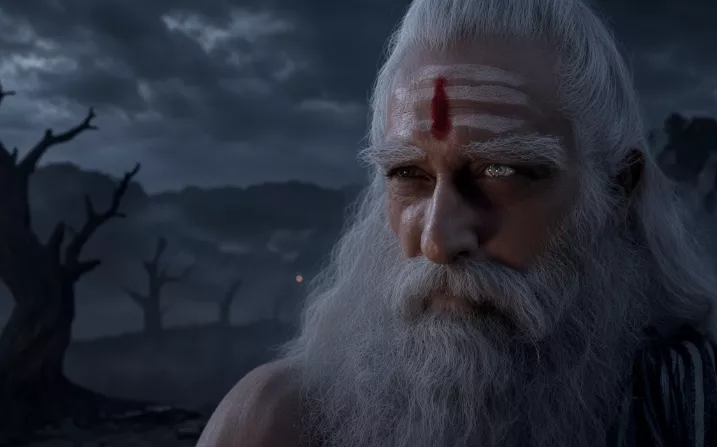
The birth of Shukracharya and the rise of the Indian epic's most lethal villain
Ushna left Swargalok. However, his story was just getting started. He entered the world of Asuras and discovered the entire conflict between them and the Devas. Ushna soon realised they were not just mindless villains waiting for their next battle. They had kings, warriors, Dharma, ambition and their own ideas of honour. However, they also had one massive disadvantage: they were still mortal.
This grievance becomes the centre of Shukracharya's story and the central plot of Mahakali as well. As shown in the teaser, Devas had amrit and the Asuras did not, which meant that when both sides locked horns on the battlefield, despite their courage and strength, the final equation was never equal. Shukracharya soon realised that the difference between the two sides was not morality but mortality, and that's when he decided to fix it.
The realisation changed his approach, and with kings like Bali and Hiranyakashipu, Shukracharya turned his focus on patience, political strategy and long-term thinking rather than simply sending warriors into another battle. However, his goal wasn't to conquer the world; it was to correct what he believed was an unfair game. While he had strategy and the skills, there was still one limitation: he could not stop death. Not yet, at least.
And that's when Shukracharya moved to learn Sanjeevni Vidya, the mystical knowledge capable of bringing the dead back to life. What followed was years of severe tapasya. Shukracharya hung upside down beneath a tree while a fire burned below him. Lord Indra unleashed natural calamities to break his concentration, but failed. Even Jayanti, Indra's daughter, was unable to disrupt his penance.
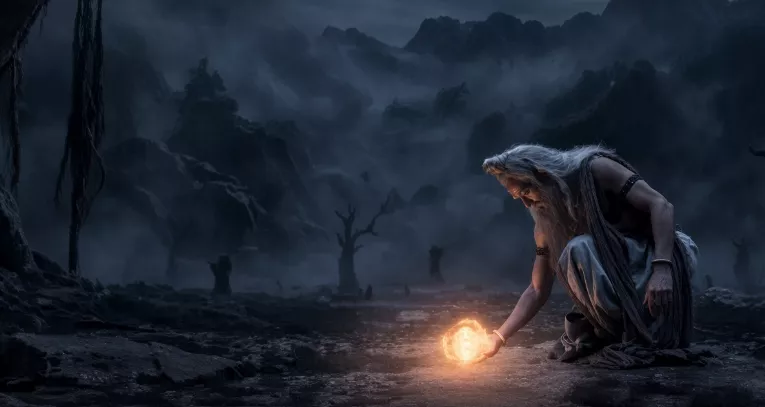
Eventually, Lord Shiva appeared and granted his wish. However, the boon came with a warning. Sanjeevni Vidya was meant to preserve balance, not become an instrument of political power. Nonetheless, once the knowledge entered the battlefield, the cosmic equation changed. Death had suddenly become almost negotiable on both sides. As things grew complicated, Devas eventually turned to Shiva, who engulfed Shukracharya, taking him into an existence where ordinary ideas of time and direction no longer applied.
Inside Shiva, Shukracharya was forced to confront the truth of his actions: how his answer to an unfair system had created another imbalance. When Parvati intervened and Shukracharya was freed, he emerged with a lesson no ashram could have taught him: power is not just about possessing it, but knowing where to stop. However, this was not the end of his tale.
Shukracharya defeated death but could not defeat affection
While things seemed to have calmed down, Shukracharya was faced with yet another big test. Kacha, the son of his old competitor Brihaspati, was sent to the sage to learn the secret of resurrection. However, things got complicated when Devayani, Shukracharya's daughter, fell in love with him. Asuras, not ready to accept Kacha, repeatedly killed him, and Shukracharya brought him back every time.
Then came the most extraordinary attempt: Kacha was killed, burnt, and his ashes mixed into Shukracharya's food, leaving the guru with an impossible choice: save his student at the cost of his own life, or let Kacha die. He chose his student, and in an almost perfect reversal, Kacha used Sanjeevani Vidya to bring Shukracharya back. Nonetheless, this was no happily-ever-after ending. Kacha and Devayani's relationship ended not with a wedding, but with curses.
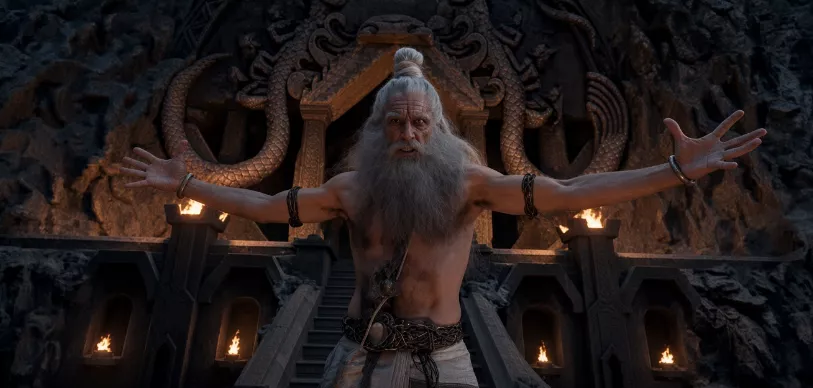
And perhaps that is the most human contradiction in Shukracharya's extraordinary life, as he could defeat death, but he could not defeat attachment. His story alone makes it impossible for anyone to simply see him as a simple Asura guru; he was a scholar, outsider, strategist, teacher, and father who challenged the cosmic order, acquired forbidden knowledge, and eventually confronted the limits of his own power.
What are your thoughts on the magnificent tale of Shukracharya and Akshaye Khanna's casting in the role? Let us know.
Next Read: 41-Year-Old Vinod Khanna Took A Pay Cut For An Intimate Kissing Scene With 21-Year-Old Madhuri Dixit